

There is one question that almost no one asks during an ERP tender, and yet it is the only one that truly matters: does your future integrator know how to say no to you?
Installing Odoo, configuring the modules, running Peppol electronic invoicing, plugging in the Belgian localisation — any certified partner can do all of that. The Belgian market has dozens of Odoo integrators, from the freelancer based in Liège to the structured firm in Brussels, by way of the Golden Partners. Technical mastery of Odoo is no longer a differentiator. It is a prerequisite.
What truly makes the difference — what determines whether your project ends as an operational success or as an awkward conversation topic at the next board meeting — is everything that happens before and around the configuration.
The real problem with ERP projects in Belgium
The studies have been consistent for ten years: between 50% and 75% of ERP projects fail to deliver the expected results. Budget overruns. Blown deadlines. Catastrophic user adoption rates. Management quietly reverting to Excel six months after go-live.
It is not Odoo that is to blame. It is the implementation process.
A features section lets you clearly present the main benefits and unique aspects of your product.
But why?
And within this process, the failure factors are almost always the same. We are not talking about bugs. We are talking about human decisions: a scope poorly framed from the outset, a client who requested too much custom development, users who never truly embraced the tool, an accounting setup configured without taking Belgian specificities into account. Things we see every week on projects taken over after a first integrator.
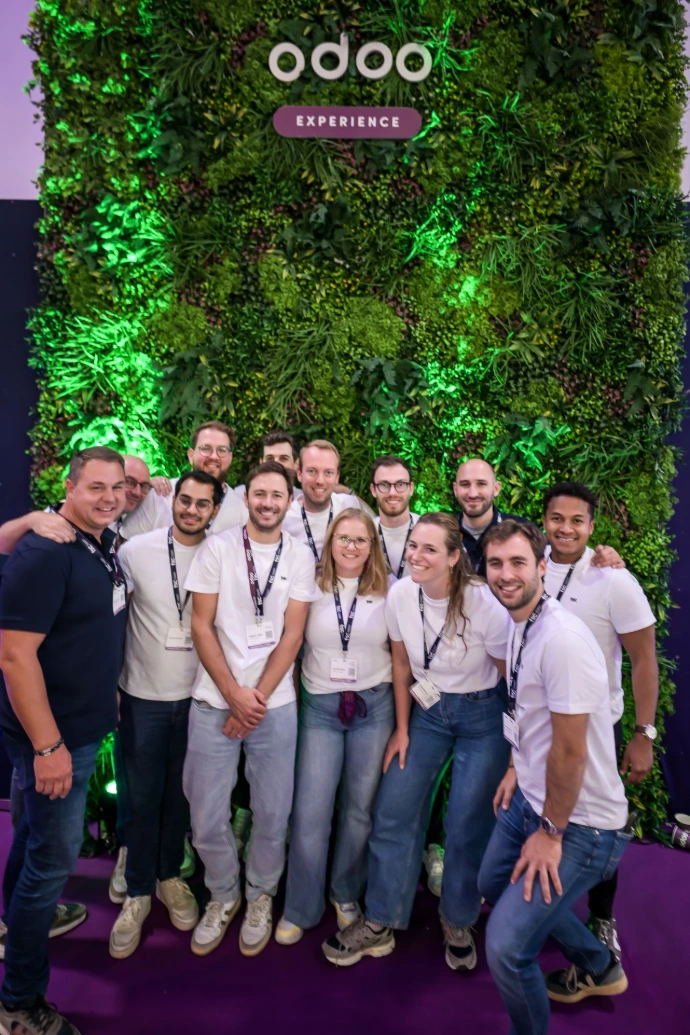
What truly makes a good integrator
1. They understand your business before touching the tool
The first mistake of an Odoo project is to start with Odoo. An integrator who turns up with slides about the modules at the very first meeting is selling you technology, not transformation.
At TSC, we start by understanding how you make money, where you lose time, what your critical workflows are, and what your field teams really experience day to day. This phase of understanding your business is not a luxury: it is the foundation. Without it, you will configure the right tool for the wrong process.
2. They limit customisation — even when you ask for it
This is probably the most counter-intuitive piece of advice you will hear: the less custom development you build, the better. And yet, this is where a large part of the budget and long-term maintainability is decided.
Odoo is a complete, rich, scalable ERP. Its standard modules cover 80 to 90% of the needs of a Belgian SME. Every piece of custom development you add is technical debt: it will have to be tested, maintained, and migrated with each new version. Too many customisations, and you end up with an Odoo that no one can develop further without a costly overhaul.
A good integrator does not say yes to everything. They analyse each request, propose a standard alternative when one exists, and only code what genuinely adds value. It is sometimes uncomfortable. It is always in your interest.
3. They frame the project with uncompromising rigour
Scoping is the most underestimated phase of an ERP project. This is where the exact scope, the priorities, the exclusions, the success criteria, the data migration plan and the validation milestones are defined. A sloppy scoping means a project that drifts.
At TSC, scoping is not an administrative formality. It is substantive work that commits both parties and serves as a reference throughout the project. When someone says "ah, but we said that…", we go back to the scoping document. Not to people's memories.
4. They make user adoption a priority, not an afterthought
The best ERP in the world is worth nothing if your teams do not use it. And yet, adoption is systematically treated as the last line of the project, after the technology, after the data, after the testing.
Adoption is built from day one: by involving key users in the design workshops, by training progressively, by creating internal ambassadors, by tailoring the training to each team's profile (salespeople are not interested in the same screens as accountants). It is as much a matter of change management as of training.
5. They master Belgian accounting — genuinely
Belgium has its own specificities. The Belgian chart of accounts (PCMN), the VAT obligations, the intra-Community declarations, Peppol and mandatory e-invoicing, the financial statements under IEC standards… An integrator who configures Odoo's Belgian localisation without mastering these accounting fundamentals will deliver you a tool that will not pass the audit of your accountant or your auditor.
At TSC, we work closely with our clients' accounting firms and finance departments. Odoo's accounting configuration is not a default setup: it is a bespoke build that takes into account your sector, your VAT regime, and your reporting obligations.
6. They govern the project — and own that role
An ERP project without clear governance is a project without a pilot. Who decides when a change request is accepted? Who arbitrates when two departments have conflicting needs? Who validates the go-live?
Project governance is the definition of roles and responsibilities on both the client and integrator sides, a regular steering committee, a change management process, and transparent communication about risks. It is not glamorous. It is what separates the projects that reach completion from those that get bogged down.
7. They know how to say no
This is perhaps the rarest skill in our profession, and the most valuable for you.
Saying no to a feature that will make the tool more complex without adding any real value. Saying no to an unrealistic deadline you impose under internal pressure. Saying no to a shaky data migration that would compromise the reliability of the system. Saying no when your request stems from a good intention but leads to a bad architecture.
An integrator who always says yes does not respect you. They are trying to please you in the short term, while setting you up for problems in the long term. At TSC, we prefer a difficult conversation now to a failed project in six months.
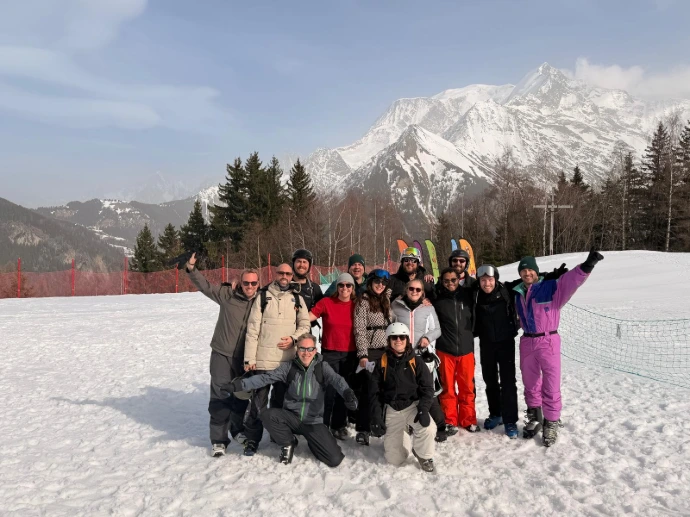
Why TSC Experts?
TSC is a consulting and integration firm based in Belgium, specialising in Odoo projects for SMEs and mid-market companies. Our approach is built around a simple principle: your ERP project must produce measurable business results, not merely an installation that works.
We are involved at every stage: strategic scoping, process analysis, configuration and integrations, training and change support, post go-live support. We know the specificities of the Belgian market — accounting, taxation, legal obligations, and the working culture of Walloon and Brussels SMEs.
And yes — we know how to say no. Because that is how we truly help you.
What you should ask your next Odoo integrator
Before signing, ask the integrator you are evaluating these questions:
- How do you handle custom development requests? (A good integrator will talk to you about value analysis before coding)
- What is your approach to change management? (If the answer is limited to "we run a training session", be wary)
- Do you have experience with Belgian accounting in Odoo? (Ask for client references involving an accounting firm or a CFO)
- What happens if I request a feature you consider counterproductive? (The answer will tell you everything)
- What is your scoping process? (Ask to see an example of a scoping document)
The answers to these five questions will tell you more about your future partner than any number of Odoo certifications.
In conclusion
Odoo is a remarkable tool. Belgium is fortunate to have Odoo at home, with a native localisation, an active community, and an ecosystem of competent partners.
But the success of an ERP project is not decided in the software. It is decided by the quality of the partner who supports you: their understanding of your business, their rigour in scoping, their ability to resist your less sensible requests, and their commitment to your teams' adoption.
That is where 80% of projects are won — or blow up.
Considering an Odoo project in Belgium? Get in touch with the TSC Experts team for a first conversation with no obligation. We will start by listening. And if your project is not a fit for us, we will tell you.
TSC Experts — Odoo Integrator in Belgium | ERP Consulting | SME Digital Transformation
Keywords: Odoo integrator Belgium, SME ERP project, Odoo consultant Belgian accounting, successful Odoo implementation, Odoo partner Brussels Wallonia

